
AI tools are now part of everyday work: drafting emails, summarising documents, writing social posts. In many small businesses, people started using them without any guidance.
That is understandable, but it creates risks. A short AI policy gives your team clear rules, so they can use AI confidently and safely.
Why a small business needs an AI policy
- Customer data: pasting personal or confidential information into some tools may break privacy rules or client agreements.
- Accuracy: AI tools can produce confident but wrong answers.
- Reputation: content that sounds generic, or is factually wrong, reflects on your brand.
- Consistency: everyone follows the same rules instead of guessing.
What to include
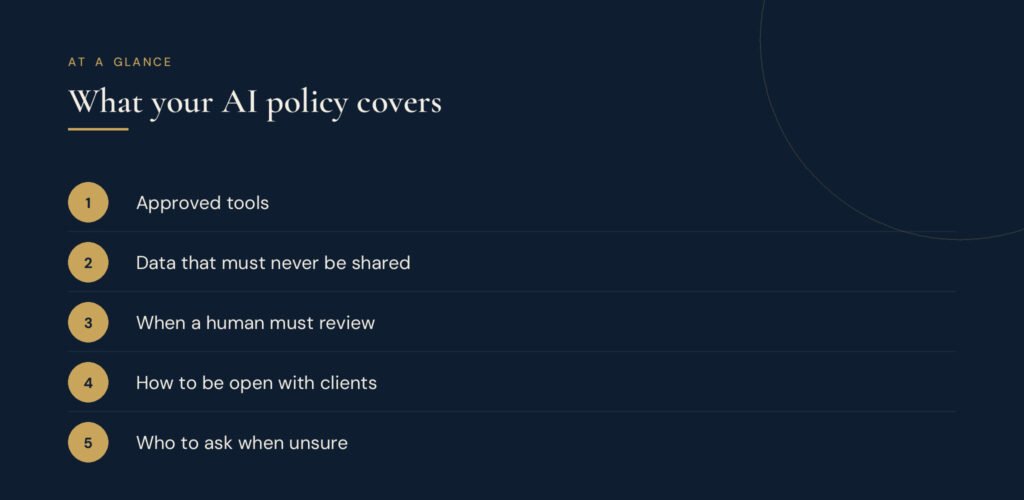
1. Approved tools
List the tools your team may use for work, and whether to use business accounts rather than personal ones.
2. Data that must never be shared
Be specific: customer names and contact details, financial information, passwords, contracts and anything a client has marked confidential.
3. When a human must review
For example: anything sent to a client, anything published, and any figures or legal statements.
4. Being open with clients
Decide how you will explain your use of AI if clients ask, and follow any client contracts that restrict it.
5. Who to ask
Name one person who answers questions and keeps the policy up to date.
A one-page template
| Section | Example rule |
|---|---|
| Approved tools | Use only the tools on the approved list, with company accounts |
| Never share | Client personal data, passwords, financial and confidential documents |
| Review | A person checks all client-facing and published content |
| Facts | Verify every figure, name and claim against a reliable source |
| Questions | Ask the operations lead before using a new tool |
Review it regularly
AI tools change quickly. Review your policy every six months, or whenever you adopt a new tool.
Read next: What Are AI Agents? and AI for small business marketing.